Purchase any Event and get
10% Off
CODE: SAVE10
T&C applicable, please referFAQ
Validity : 20th Jul'26 to 30th Jul'26

Mohammed is a security and DevSecOps professional with deep experience helping organizations strengthen their security posture across modern, cloud-native environments. His work centers on bridging security, engineering, and operations to enable scalable, resilient, and secure systems in complex enterprise ecosystems.
He is an active contributor to the global technology community and a frequent speaker at leading industry conferences and platforms, including DEF CON, Black Hat, KubeCon (Paris), ISACA, IANS, and Wallarm, among others. He is also regularly invited to serve as a technical session judge, where he brings practical insight and industry rigor to evaluating emerging ideas and innovations.
He maintains strong ties with academia and thought leadership. He contributes research associated with Harvard University, publishing work that advances discussions on modern security practices, governance, and risk management. He is a member of the Harvard Business Review Advisory Council, where he supports collaboration between industry and academia and promotes knowledge sharing and innovation.
His work has a global dimension through his role on the Global Advisory Board of VigiTrust Limited (Dublin, Ireland), where he contributes to international strategies in cybersecurity, data protection, and risk management. He holds numerous industry certifications that reflect the breadth and depth of his expertise in security and cloud technologies.
He is the author of Cloud-Native DevOps, a practical guide to building scalable, reliable, and secure cloud-native applications. The book draws on real-world experience to cover modern DevOps and DevSecOps practices, containers, CI/CD pipelines, and security integration in cloud-native architectures.
His areas of focus include cybersecurity, cloud-native technologies, DevSecOps, risk management, and the role of AI in cloud-native ecosystems. Beyond his professional work, he brings a range of interests and perspectives that inform his leadership and thought leadership.
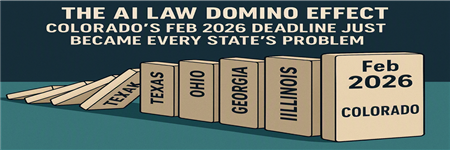
Colorado SB 24-205, signed into law in 2024, establishes a risk-based framework for the governance of artificial intelligence systems that make or substantially inform consequential decisions affecting Colorado consumers. This session delivers a detailed analy ...
Claude is available through several products — the claude.ai chat interface, Claude Code for developers, Claude Cowork for non-developers, and the API for custom applications — and choosing the right model tier (Haiku, Sonnet, or Opus) for a given task meaning ...
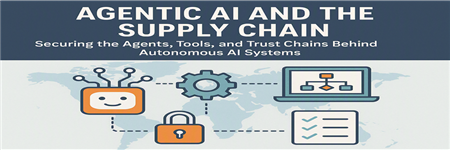
As organizations move from single-model AI applications to autonomous, tool-calling agents, the nature of supply chain risk has fundamentally changed. A traditional software supply chain is largely static and resolved at build time. An agentic AI supply chain ...

Zero-trust has three core principles: verify explicitly, use least privilege, and assume breach. The problem is that all three were designed with a human principal in mind. An AI agent is not a human. It does not authenticate at login and idle between requests ...

HR documents carry real weight. A poorly worded job description affects who applies. A policy document that contradicts itself creates legal exposure. An onboarding guide that is out of date wastes new hire time. The stakes are high enough that most HR teams h ...

MCP is the protocol that lets Claude discover and call external tools. Your MCP server is the thing that registers those tools, validates what Claude sends, authenticates to your downstream systems, executes the calls, and hands the results back. Getting that ...

Claude has four things it can do: read, reason, write, and act. Most organizations have only unlocked the first three. The fourth one - acting on your systems, not just answering questions about them - is where the real productivity gains live. Connecting Clau ...
Claude is available through several products — the claude.ai chat interface, Claude Code for developers, Claude Cowork for non-developers, and the API for custom applications — and choosing the right model tier (Haiku, Sonnet, or Opus) for a given task meaning ...

MCP (Model Context Protocol) is the standard that lets AI models talk to external tools and data sources. Think of it as the plumbing that connects your AI assistant to your company's actual systems - file storage, databases, APIs, internal services. It is pow ...
Colorado SB 24-205, signed into law in 2024, establishes a risk-based framework for the governance of artificial intelligence systems that make or substantially inform consequential decisions affecting Colorado consumers. This session delivers a detailed analy ...